Key Takeaways
- A PDF is not just the visible page; it can carry metadata, comments, and hidden content that survive ordinary saves and are recoverable by the recipient.
- Sanitization physically removes that hidden data, which is different from visual redaction [K1].
- Online PDF tools upload your file to a server, creating a second privacy risk you cannot verify [K4].
- For shared office computers, use a local-processing tool such as OctopusPDF Redact / Sanitize Tool, which runs entirely in the browser tab so the server physically cannot receive your file [K1][K4].
- A simple workflow — sanitize, verify, then share — protects personal data in legal, medical, HR, and tax contexts [K2][K3].
1. Introduction
When you share a PDF from a shared office computer, you usually check the visible page and click send. But the visible text is only the surface. A PDF file can also contain metadata (author, software, creation dates), comments, annotations, hidden layers, and leftover content from earlier edits. Recipients with basic PDF tools or scripting skills can extract that data without special permissions.
The risk increases on shared office machines. Files you did not create, documents edited by previous users, scanned contracts, or HR paperwork can carry traces of other people's information. Sharing such a file without cleaning it can expose personal data — an outcome with legal and compliance consequences under GDPR and other data protection frameworks [K2][K3].
This article explains what sanitization actually does, why online tools are often the wrong solution, and how to sanitize a PDF locally before sharing it from a shared office computer. You will finish with a repeatable workflow and a clear answer to the question: how do you make sure the file you send contains only what you intended?
2. Why sanitizing a PDF matters on a shared computer
2.1 What is hiding inside a PDF
A PDF is not a flat image. It is a structured file format that can hold several types of hidden data:
- Metadata: author name, company, software version, creation and modification timestamps
- Comments and annotations: reviewer notes, sticky notes, highlight text
- Hidden layers and invisible text: content that is present in the file but not rendered on screen
- Embedded objects: fonts, scripts, attachments, or previous revisions
On a shared computer, documents accumulate these artifacts through normal use. A colleague opens a tax form, a recruiter edits a resume, a lawyer reviews a contract — each interaction can embed traces that the next person who shares the file will unknowingly distribute.
2.2 Which scenarios are most affected
The reference knowledge identifies use cases that demand privacy protection:
- GDPR compliance: processing personal data without sending it to third parties [K2]
- FOIA requests and whistleblower anonymous submissions [K2][K3]
- Legal and medical documents before sharing [K2][K3]
- Resume and job application redaction [K2][K3]
- Tax forms before e-filing [K2][K3]
- Confidential PDFs on shared or company devices [K2]
If your work involves any of these, sanitization is not optional. It is the difference between "removing visible text" and "actually removing the data".
3. What sanitization actually does vs. redaction
Sanitization is often confused with redaction, but the two are not the same.
Redaction visually covers or removes specific text or areas on the page. The visible content is gone, but the underlying text may remain in the file's object tree and can be recovered.
Sanitization physically deletes metadata, comments, and hidden content from the file structure itself [K1]. The output is a cleaner file that contains only the content you intend to share.
For shared office computers, this distinction is critical. Imagine a lawyer redacting a client's name in a PDF, then sharing the file from a shared workstation. If the tool only covers the text visually, the client's name can still be extracted from the file structure. Sanitization removes the remnant entirely.
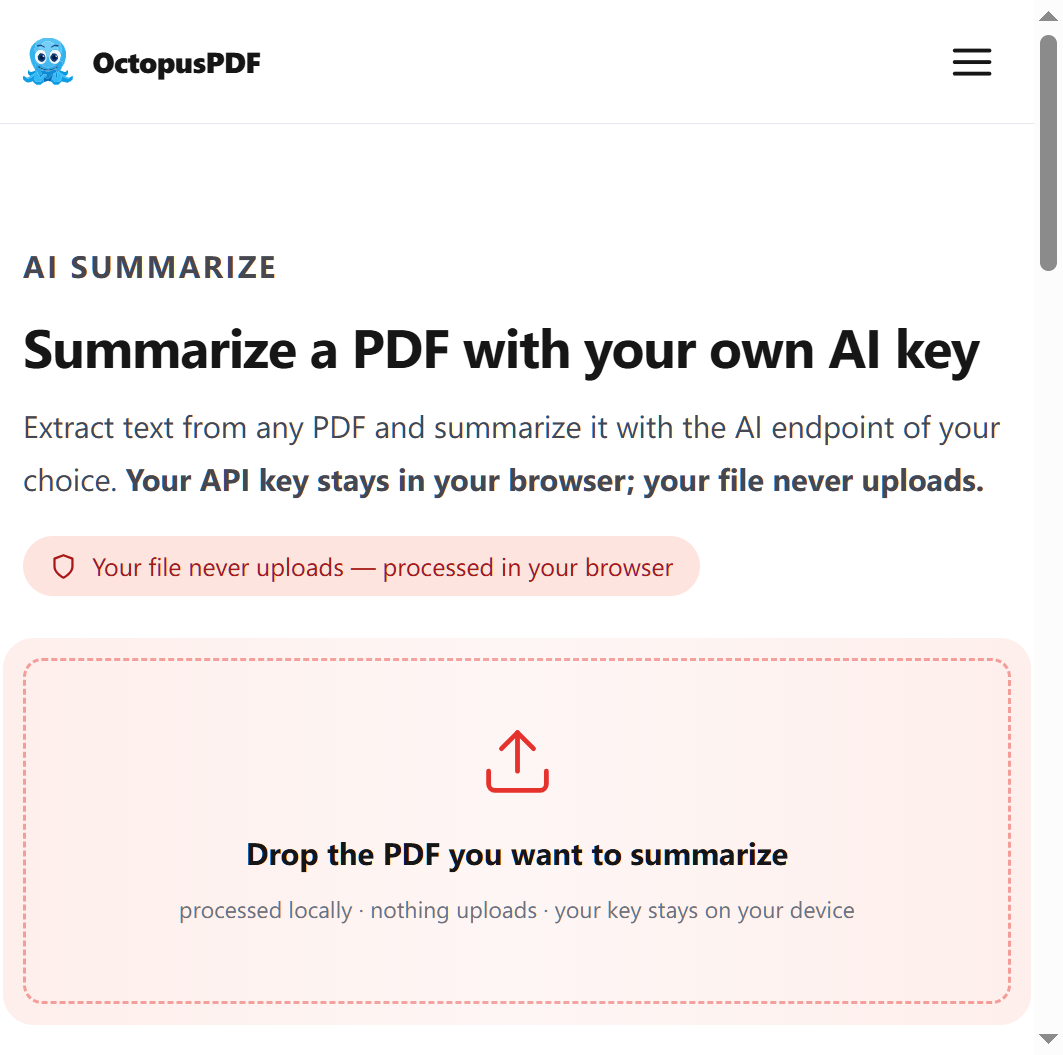
The OctopusPDF Redact / Sanitize Tool defines the practical scope of sanitization:
| What gets removed | What it means |
|---|---|
| Metadata | Author, producer, timestamps, software names |
| Comments and annotations | Notes left by reviewers or previous editors |
| Hidden content | Invisible layers, hidden text, form data |
This is the minimum set of artifacts to remove before sharing a confidential PDF [K1]. Anything less leaves recoverable data in the file.
4. Why online PDF tools are not a safe answer
When you need to sanitize a PDF quickly, the first instinct is to use a free online tool. On a shared office computer, that instinct is understandable — but it creates a separate privacy problem: online tools require uploads.
The reference knowledge states this clearly: "Every other online PDF tool uploads your file to a server. Even when they promise to 'delete after 1 hour', you cannot verify it. Your contracts, tax forms, medical records and manuscripts have all spent time on a stranger's server" [K4].
This produces a double risk on a shared machine:
- Your file is copied to a third-party server, outside your control.
- The tool's deletion promise cannot be independently verified.
For GDPR-regulated data, this is a genuine compliance concern. Sending personal data to an unverified server without a clear legal basis can violate data processing principles [K2][K3]. The safer path is local processing: the entire sanitization pipeline runs in the browser tab, so the servers physically cannot receive your file [K4].
5. How to sanitize a PDF locally: a practical workflow
5.1 What the tool provides
OctopusPDF Redact / Sanitize Tool is built around local processing and privacy-first design [K1]:
- Physical deletion of metadata, comments, and hidden content before sharing [K1]
- 100% local processing — the file never leaves the browser tab [K1][K4]
- Free tier: 3 conversions per day, 20 MB file size limit [K1]
- Pro tier: unlimited conversions, 100 MB file size limit, batch mode [K1]
The free tier is enough for occasional sanitization. The Pro plan adds batch mode, which helps when you routinely prepare multiple documents from the same shared machine.
5.2 Step-by-step process
Follow this workflow each time you need to share a PDF from a shared office computer:
- Open the OctopusPDF Redact / Sanitize Tool in your browser.
- Select the PDF file from the shared computer. Because everything runs locally, nothing is uploaded to a server [K1][K4].
- Confirm that metadata, comments, and hidden content are included in the sanitization.
- Run the sanitization. The tool processes the file inside the browser tab.
- Download the sanitized output.
- Verify the output before sharing:
- Open the file and check Document Properties → Metadata. It should be empty or generic.
- Open the Comments panel. It should contain no annotations.
- Optionally extract the text with a local PDF reader and confirm that only the intended visible text remains.
- Share only the sanitized copy.
This sequence — sanitize, verify, share — closes the loop. Verification matters because sanitization is a process, not a magical guarantee.
5.3 AI features: Bring Your Own Key (BYO) design
OctopusPDF also offers AI-based Summarize and Translate features, and the privacy design is consistent with local processing [K5]:
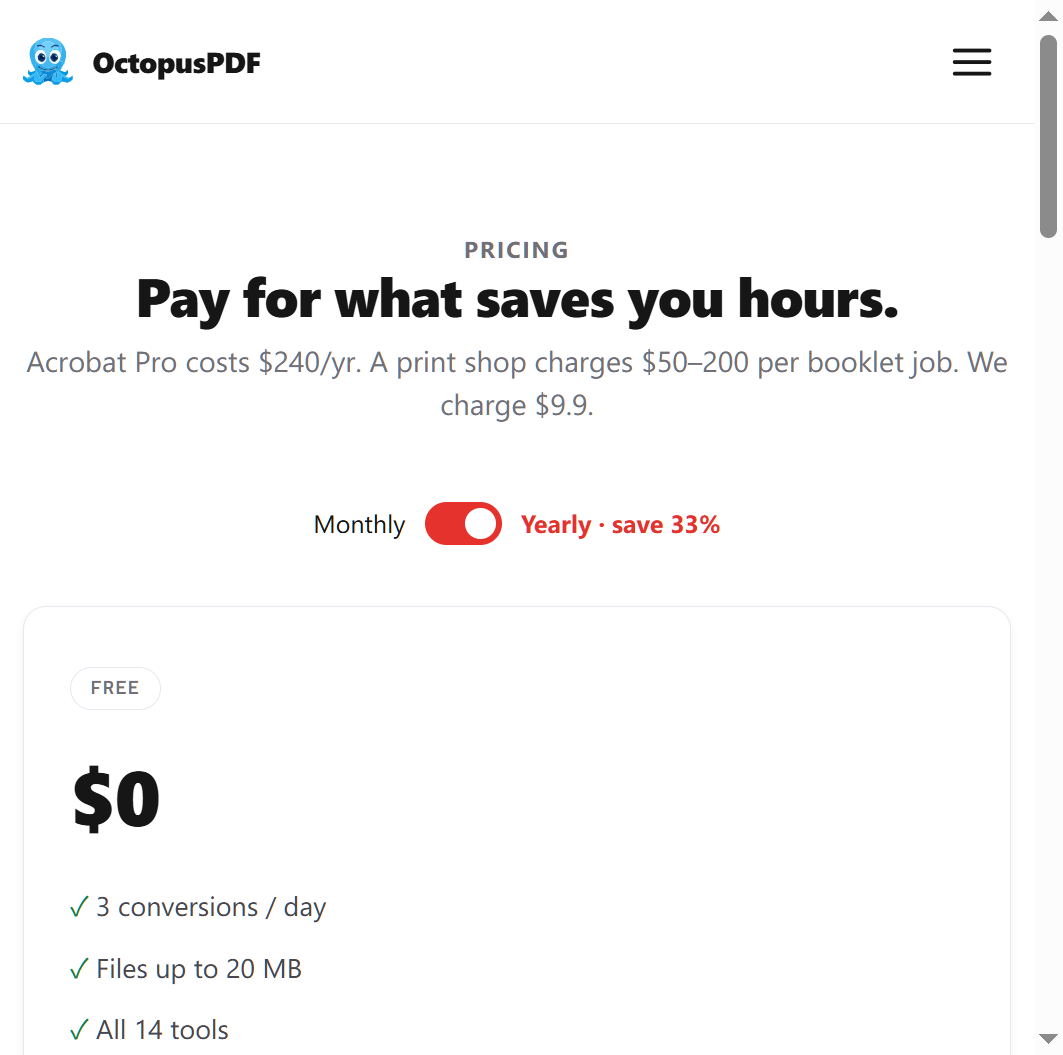
- Your PDF never uploads: the file is parsed inside the browser tab with pdf.js [K5]
- Your API key stays local: stored only in browser localStorage; the backend never receives it [K5]
- No server-in-the-middle: the browser connects directly to the OpenAI-compatible endpoint you entered, and OctopusPDF does not proxy the request [K5]
This matters on shared office computers because even AI-assisted features do not route your document through a server you did not choose. For confidential documents, that design preserves the privacy benefit of local processing.
6. Limitations and boundary conditions
No tool eliminates every risk in every scenario. Sanitization is a practical safeguard, and you should understand its limits:
- Visible content review is still your responsibility. Sanitization removes metadata, comments, and hidden content, but you must still confirm that the visible text and images are correct before sharing.
- Digitally signed PDFs may break. Changing the file structure during sanitization can invalidate a digital signature. If signature validity is required, sanitize first, then sign the cleaned file.
- File size limits apply. The free tier supports files up to 20 MB and 3 conversions per day; Pro raises that to 100 MB and unlimited conversions with batch mode [K1].
- Regulated environments may have additional rules. In legal or medical settings, follow your organization's data handling policy in addition to using a sanitization tool.
A practical post-sanitization checklist:
- Open the output file in a PDF reader.
- Check Document Properties → Metadata for leftover author or software names.
- Open the Comments/Annotations panel to confirm it is empty.
- Select all text and copy it into a plain text editor to see exactly what a recipient could extract.
- If any step reveals unexpected data, resanitize or remove the artifacts manually.
7. Conclusion
Sharing a PDF from a shared office computer requires more than a quick glance at the visible page. Metadata, comments, and hidden content can survive normal saves and become visible to the next recipient. The stakes are higher when the document contains GDPR-regulated personal data, legal or medical information, resumes, or tax forms [K2][K3].
The practical answer is to sanitize the PDF before sharing — and to do it with a tool that processes the file locally, so your document never leaves your machine. OctopusPDF Redact / Sanitize Tool physically deletes metadata, comments, and hidden content, runs 100% locally, and offers a free tier for occasional use [K1][K4]. Its AI features follow the same design through a Bring Your Own Key setup, keeping both the file and the API key local [K5].
Adopt a simple rule: sanitize before you share, verify after you sanitize, and never upload a confidential PDF to an online tool you cannot verify.
8. FAQ
Q1: What is the difference between redaction and sanitization?
Redaction visually removes or covers visible text. Sanitization physically deletes metadata, comments, and hidden content from the PDF structure [K1]. A redacted file can still contain recoverable hidden data; a sanitized file should not.
Q2: Can I use a free online PDF tool to sanitize confidential files?
No. Most online tools upload your file to a server, and you cannot verify their "delete after 1 hour" promises [K4]. For confidential or GDPR-protected data, use a local-processing tool like OctopusPDF Redact / Sanitize Tool, which runs entirely in the browser tab so the server physically cannot receive your file [K1][K4].
Q3: What exactly does the OctopusPDF Redact / Sanitize Tool remove?
It removes metadata, comments, and hidden content before sharing [K1]. Processing is 100% local, so the document never leaves your browser tab [K4].
Q4: What is the cost of sanitizing PDFs with OctopusPDF?
The free tier allows 3 conversions per day with files up to 20 MB. The Pro plan offers unlimited conversions, files up to 100 MB, and batch mode [K1].