Key Takeaways
- Redacting a PDF is not the same as deleting text: metadata, comments, and hidden content must be physically removed before a file is shared [K1].
- Most mainstream "free" online redactors upload your file to a third-party server, which creates a privacy paradox: the tool meant to protect your data is the same one your file passes through [K2].
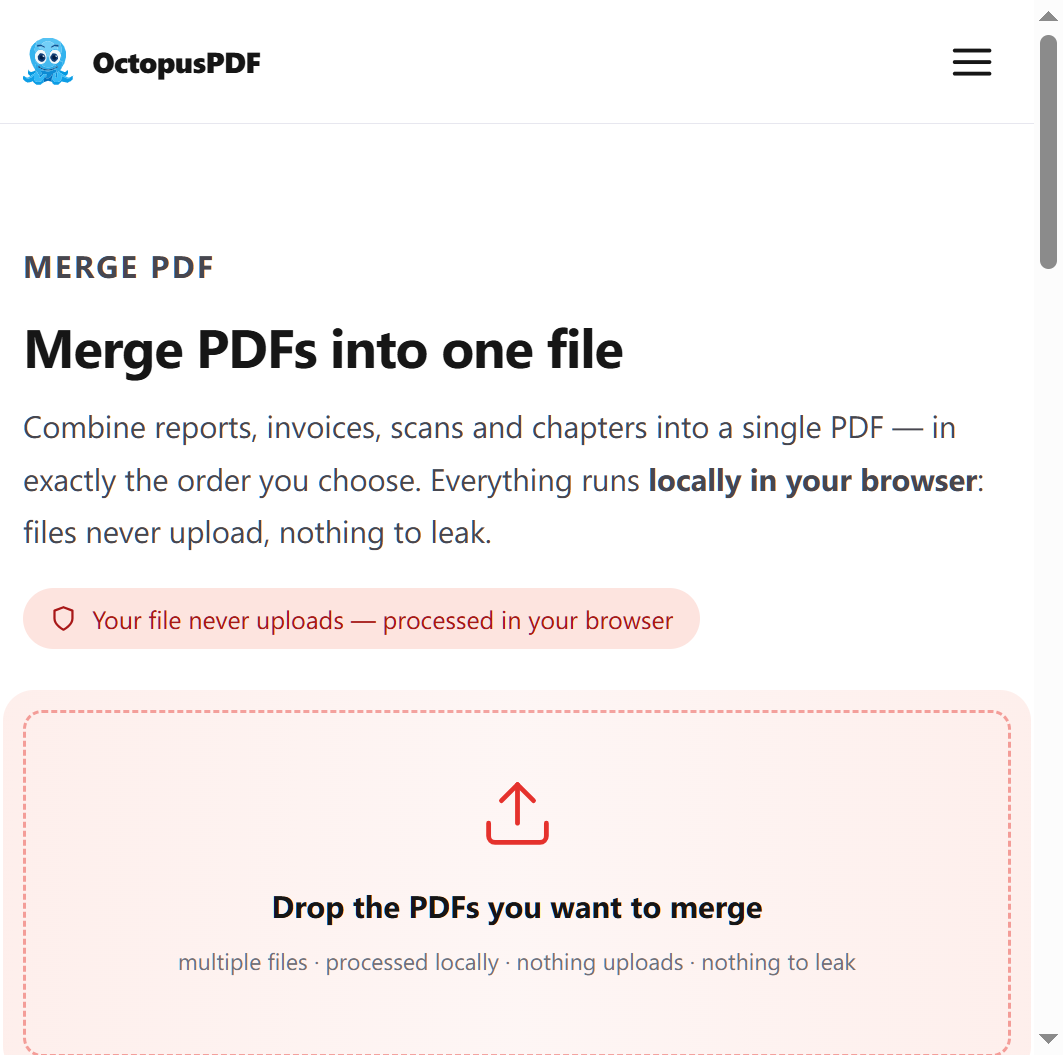
- A secure free workflow exists today: browser-based local redaction processes the PDF entirely on your device, with 0 bytes uploaded to any server [K1][K5].
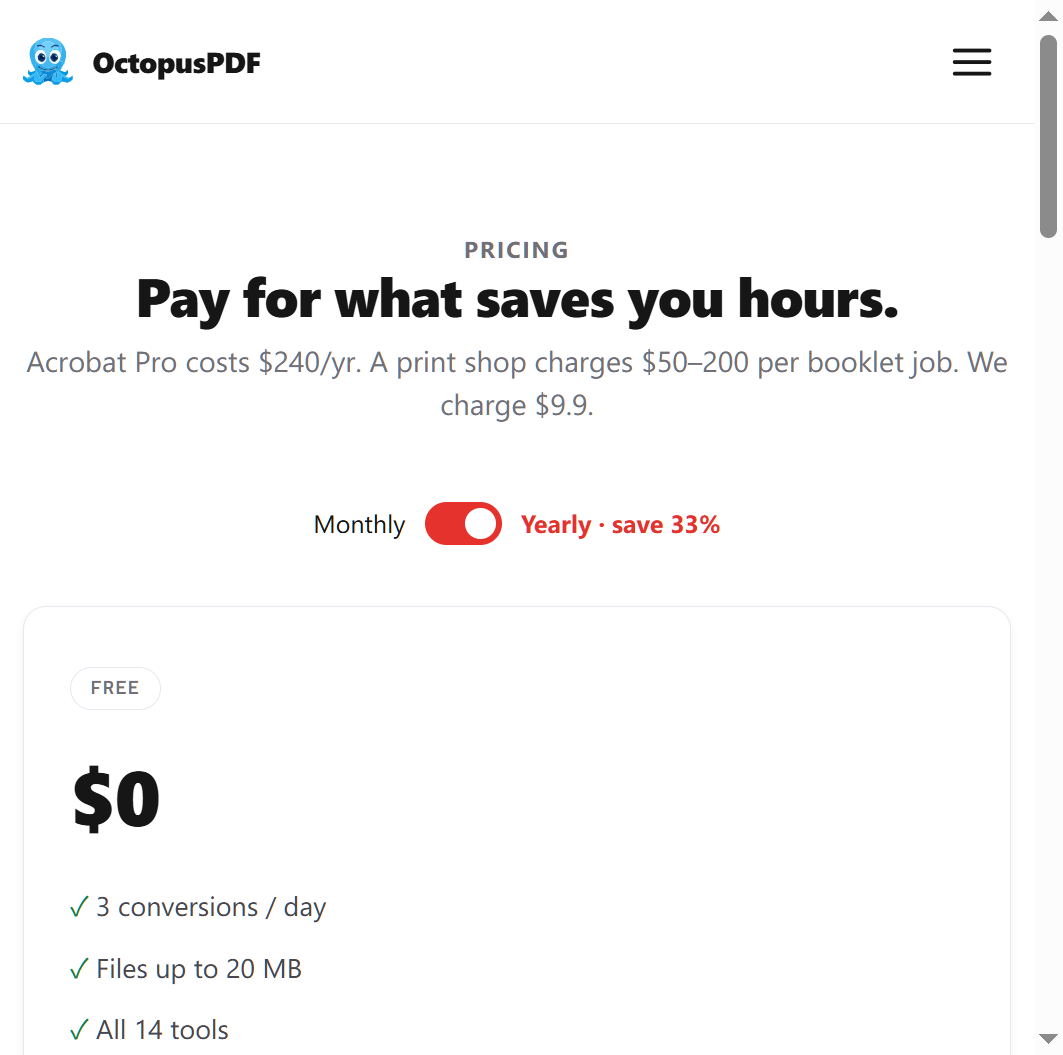
- The practical free tier for local redaction is 3 conversions per day with 20 MB files; a paid tier adds unlimited conversions, 100 MB files, and batch mode [K1].
- GDPR compliance, FOIA submissions, legal and medical documents, resumes, and tax forms are the clearest cases where upload-based redaction is unacceptable [K4].
1. Introduction
Searching for "how to redact PDF for free" usually leads to an online tool: upload your file, black out the sensitive parts, download the result. It feels fast and costs nothing. But for many documents, the cost is not visible at the moment of upload.
The core question this article answers is simple: Can you redact a PDF for free without sacrificing data security? Yes — provided the redaction happens locally, on your own device, without sending the file to a server. Real-world testing of one local redaction tool recorded 0 bytes uploaded to any server across 113 documents [K5]. That is the standard a genuinely private tool should meet.
Below, we explain why upload-based tools fail the privacy test, how local redaction works, how AI features can stay local too, and which use cases demand this level of care.
2. The Paradox of Upload-Based Redaction Tools
Core conclusion: An online redaction tool that uploads your file to its server contradicts the entire purpose of redaction [K2].
Virtually every mainstream free redaction service is server-based. The list includes FreePDFRedactor, AvePDF, DocHub, and Smallpdf — all of which upload your document for processing. FreePDFRedactor, for example, only handles 20 pages or 5 MB, which tells you the file is being processed off-device, not locally. Even tools marketed as AI-powered are not exempt: redact-pdf.ai offers AI-based PII detection, but it uploads files to Azure [K2].
The problem is not merely theoretical. As one competitor blog concedes: "The tool claiming to protect your privacy is the same one your file just passed through" [K2]. That is the paradox — an upload-based privacy tool is structurally unable to guarantee privacy.
Practical advice: Before using any "free PDF redactor," ask three questions:
- Where does my file go after I click upload?
- Does the provider store, log, or retain the document?
- What happens to the file if I close the tab or the session expires?
If you cannot answer these questions from the provider's documentation, the tool cannot be considered safe for sensitive documents.
3. What "Free and Secure" Actually Looks Like: Local Browser-Based Redaction
Core conclusion: Free and secure can coexist when the redaction runs 100% locally in your browser [K1].
This is the model used by OctopusPDF. The redaction process happens entirely in the browser tab, and the file never reaches a server [K2]. The practical effect is that even if you redact a contract, tax form, or medical record, that document is never transmitted anywhere.
The process works like this:
- Open the redaction tool in your browser.
- Select the local PDF file.
- Apply redaction and sanitization on-screen.
- Download the result directly to your device.
No account, no upload queue, no server-side processing step.
Equally important is what redaction means technically. "Redact and sanitize" in this context physically deletes metadata, comments, and hidden content before the file is shared [K1]. Simply drawing a black box over text is not enough — text behind the box can remain in the file layer. Sanitization removes it.
Practical advice: If you are on a free plan, understand the limits. OctopusPDF's free tier allows 3 conversions per day and files up to 20 MB; the Pro tier offers unlimited conversions, 100 MB files, and batch mode [K1]. For a freelancer or small office, 3 daily conversions is enough for routine document cleanup. For a legal or compliance team processing files all day, the Pro tier is the realistic option.
4. AI Features Can Stay Local Too: Bring Your Own Key
Core conclusion: Even AI-assisted PDF tasks — summarization and translation — can be performed without placing a server in the middle of your data flow [K3].
Many users want AI to help identify or summarize sensitive content, but they assume that means sending the PDF to a cloud provider. With a Bring Your Own Key (BYO) architecture, that assumption is wrong.
Under this model:
- The PDF is parsed inside the browser tab using pdf.js; it is never uploaded [K3].
- The user provides their own API key, which is stored only in browser localStorage [K3].
- The browser connects directly to the OpenAI-compatible endpoint the user entered; the service does not proxy the request [K3].
- The backend has no API call that receives the key, meaning it cannot log or reuse it [K3].
The result is that AI features inherit the same privacy boundary as local redaction: your document and your credentials both stay under your control.
Practical caveat: AI features require you to bring your own API key and usually run against a paid AI endpoint. Core redaction and sanitization do not require a key at all. If you only need to redact, the free local tool is sufficient.
Practical advice: When evaluating AI-enabled PDF tools, check the network path. If the vendor describes a proxy or a central server that relays API calls, your file content can pass through that server. A direct browser-to-endpoint connection is the architecture that preserves privacy [K3].
5. Use Cases That Demand This Level of Privacy
Core conclusion: There is a clear set of scenarios where upload-based redaction is not just inconvenient — it is a compliance or security risk [K4].
The documents that most urgently require local-only redaction include:
- GDPR compliance documents. Processing personal data without sending it to third parties is a structural obligation, not a preference [K4].
- FOIA requests and whistleblower submissions. Anonymity and sender protection depend on the file never leaving the submitter's device [K4].
- Legal and medical documents. These files often contain privileged or protected information where an unauthorized third-party copy is itself an incident [K4].
- Resumes and job applications. Redacting a phone number or address on a resume before sending it to an external recruiter is pointless if the redaction service already copied the file [K4].
- Tax forms before e-filing. Financial identifiers such as Social Security numbers should not reside on a PDF vendor's server [K4].
- Confidential PDFs on shared or company devices. Local processing keeps sensitive files out of cloud logs and away from other users of the same machine [K4].
Practical advice: Match the tool to the document's sensitivity. A marketing brochure can be redacted in any online tool. A signed contract, a court filing, or a patient record should only be redacted through a local workflow. If in doubt, treat the document as if it will be stolen at every hop — and choose the path with no hops.
6. Real-World Reliability: Does Local Redaction Hold Up?
Core conclusion: Local browser-based redaction is not a slow or fragile compromise; it performs well on real-world files [K5].
The strongest evidence comes from a test of 113 real-world PDFs run through a local redaction tool. The results:
| Metric | Result |
|---|---|
| Real-world PDFs tested | 113 |
| Success rate | 91.2%; the remaining files were DRM-locked [K5] |
| Median processing time | 420 ms across 7 core operations [K5] |
| Bytes uploaded to any server | 0 [K5] |
Two observations follow from this data.
First, the success rate reflects a boundary condition rather than a flaw: the failures were DRM-locked files, not privacy failures. A document that was intentionally locked against modification is a separate problem from redaction itself.
Second, sub-second median processing time means local execution is not a performance sacrifice. For single-file tasks, the browser-based workflow is effectively immediate [K5].
Practical advice: If a local tool fails to open a PDF, check whether the file is DRM-protected before blaming the redactor. Also keep a backup of the original file; redaction physically deletes content, and that deletion is not reversible [K1].
7. Key Comparison: Free vs. Pro, and Local vs. Upload-Based
OctopusPDF Free vs. Pro
| Feature | Free | Pro |
|---|---|---|
| Conversions | 3 per day | Unlimited |
| Max file size | 20 MB | 100 MB |
| Batch mode | Not available | Included |
| Processing location | 100% local, in-browser | 100% local, in-browser |
Free tier pricing and limits per [K1].
Local Redaction vs. Upload-Based Redaction
| Factor | Local Browser Redaction | Upload-Based Tool |
|---|---|---|
| File leaves your device | No — 0 bytes uploaded [K5] | Yes, by definition [K2] |
| Metadata & hidden content removed | Yes, physical deletion [K1] | Varies by provider |
| Server compromise risk | None (no server copy exists) | Provider's server holds a copy |
| Typical free limits | 3 conversions/day, 20 MB [K1] | e.g., FreePDFRedactor: 20 pages / 5 MB [K2] |
| Fit for GDPR, medical, legal files | Yes [K4] | Risky |
8. FAQ
Q1. Does "free PDF redaction" automatically mean my file is uploaded to a server?
No, but it is the default behavior of most mainstream services. FreePDFRedactor, AvePDF, DocHub, and Smallpdf all upload files for processing [K2]. A free tool only protects your privacy if it runs locally in the browser — with no server in the path. OctopusPDF is one such example: redaction happens entirely in the browser, and the file never reaches a server [K2].
Q2. What are the limits of the free local redaction tier?
The free tier allows 3 conversions per day and files up to 20 MB. The Pro tier removes those limits: unlimited conversions, 100 MB files, and batch mode [K1].
Q3. If I use AI features like summarization or translation, does my PDF leave my device?
Only if the vendor inserts a server into the connection. With a Bring Your Own Key setup, the PDF is parsed locally in the browser, your API key stays in browser localStorage, and the browser connects directly to the AI endpoint — the backend never receives the key or a proxied request [K3].
Q4. Why is drawing a black box over text not enough for redaction?
Because the underlying text and hidden data can remain embedded in the file. Proper redaction physically deletes metadata, comments, and hidden content before the file is shared [K1]. Sanitization is what differentiates a redacted file from a visually covered one.
9. Conclusion
Free PDF redaction and data security do not have to be an either-or choice. The deciding factor is not the price — it is the architecture. Upload-based tools, however convenient, create a logical contradiction: the file you are trying to protect passes through a third-party server [K2]. A local, browser-based workflow eliminates that contradiction entirely.
For most privacy-sensitive cases — GDPR-related documents, legal and medical records, resumes, tax forms, and whistleblower submissions — the correct next step is to redact locally [K4]. OctopusPDF's free tier is a practical entry point: 3 conversions per day, 20 MB files, 100% local processing, and 0 bytes uploaded [K1][K5].
If you routinely handle sensitive PDFs, make local redaction your default, use free tiers for light workloads, and reserve paid plans for batch or large-file needs [K1]. Your redaction tool should never be the weakest link in your data chain.