Key Takeaways
- Merging PDFs is a routine task for freelancers, attorneys, publishers, and small business owners who need to combine invoices, statements, scans, or manuscript pages into a single file.
- Browser-based tools that process files locally offer a meaningful privacy advantage: your documents never leave your device, which matters for confidential or client-sensitive material [K1][K4].
- You can merge more than just PDFs—many modern tools also convert images (JPG/PNG) into a single PDF, one image per page, in the order you choose [K4].
- Before choosing a tool, verify its file size limits, page reordering options, and whether it strips hidden metadata—especially if you handle legal or financial documents [K1].
- This guide focuses on practical, scenario-based steps you can apply immediately, whether you are working on a shared device, a print job, or a client deliverable.
1. Introduction
If you have ever tried to email a client a single PDF only to discover the invoice, terms, and signed agreement are three separate files, you already know the pain. Merging PDF files is one of the most common document tasks, yet it is surprisingly easy to do it poorly: files upload to unknown servers, page order gets scrambled, or metadata you did not intend to share travels along with the document.
The good news is that you do not need expensive desktop software or a degree in document engineering. Modern browser-based tools can combine PDFs, reorder pages, and even convert images to PDF—all without a single upload to a remote server [K4]. For professionals who handle confidential documents on shared devices, or for small businesses that merge invoices and statements weekly, this matters more than raw speed.
This guide walks you through the entire process step by step: from choosing the right tool, to merging files, to checking the output for errors. It also covers common scenarios like combining scanned images, preparing print-ready booklets, and cleaning metadata before sending. Whether you are a freelance designer, a solo attorney, or a grad researcher preparing a manuscript, you will find a workflow that fits.
2. Choose the Right Tool for Your Workflow
Core conclusion: The safest and most efficient way to merge PDFs is to use a browser-based tool that processes files locally on your device. This eliminates upload risks, reduces waiting time, and keeps sensitive data under your control [K4].
Not all PDF tools are created equal. Some require file uploads to a cloud server, which introduces a privacy risk if you handle client data, legal documents, or financial records. Others are desktop applications that need installation and updates, which can be a burden on shared or locked-down devices.
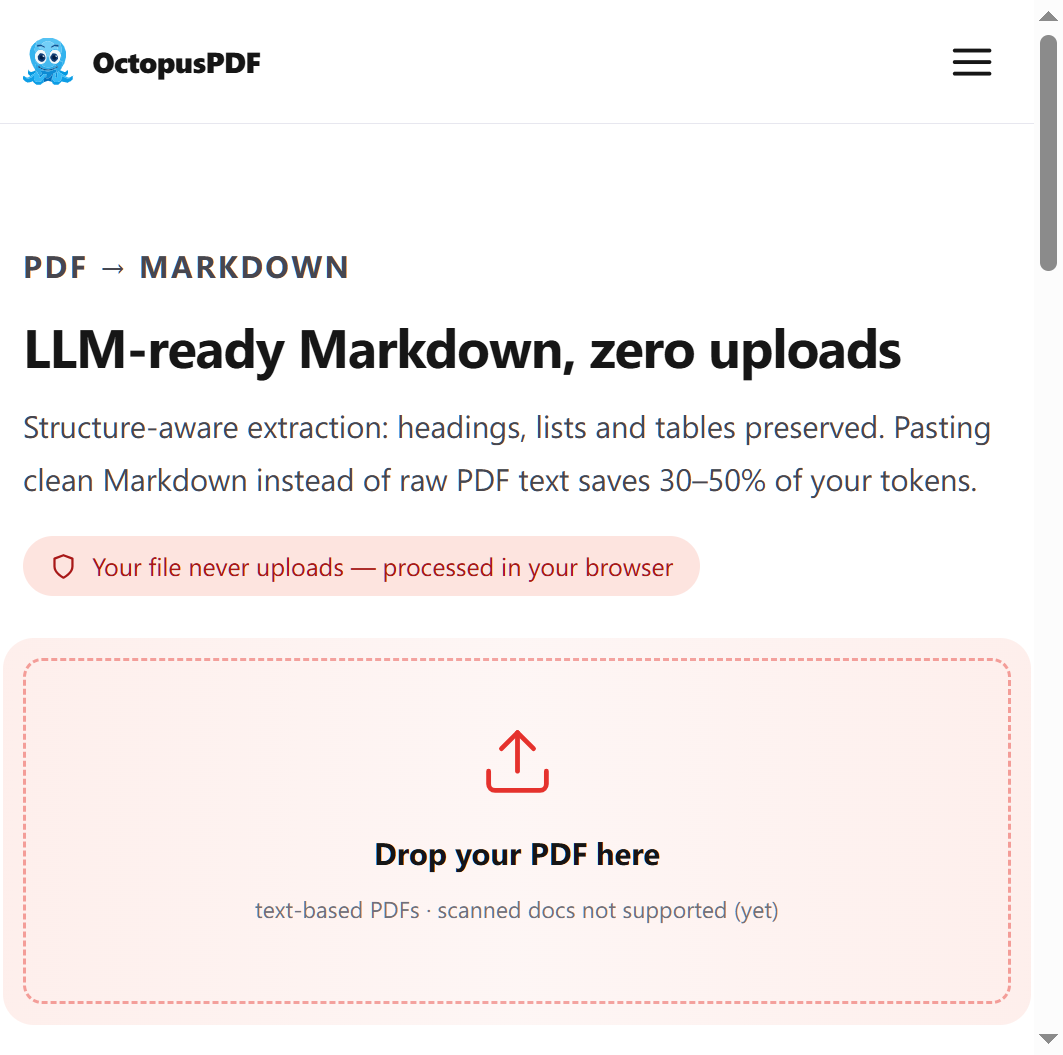
Browser-based tools that use local-only conversion are the sweet spot for most users. As one product team explains, when you use their "Images to PDF" converter, images are embedded into a brand-new PDF entirely on your device—no upload, no server, no queue [K5]. You can even verify this yourself by opening your browser's network panel during conversion: if no network requests are made, your files never left your machine [K5].
What to look for in a merge tool:
- Local processing (files stay on your device)
- Drag-and-drop interface with visual preview
- Page reordering (you should be able to arrange pages before export)
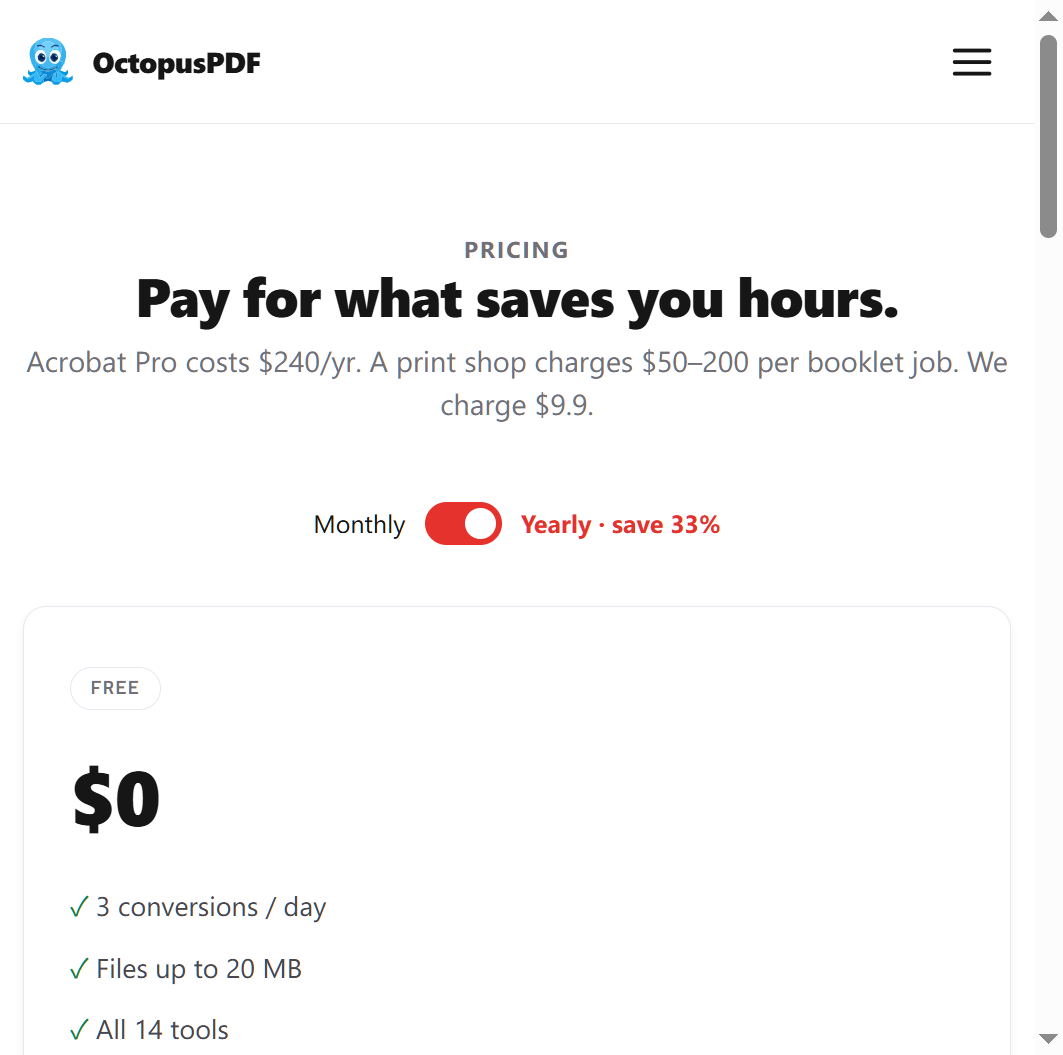
- File size allowance that fits your typical documents (some tools cap at 100 MB on paid plans) [K1]
- Metadata handling (ideally, you can strip hidden data before sending) [K1]
For a quick decision, ask yourself: "Would I be comfortable if this document were publicly visible for one minute?" If the answer is no, you need a local-first tool.
3. Step-by-Step: Merging Multiple PDFs
Core conclusion: Merging PDFs is a three-step process—add files, confirm order, and export. The details matter, especially when the document is long or the order is critical.
Here is a generic workflow that works with most local-first browser tools, including OctopusPDF's suite:
- Open the merge tool in your browser. Navigate to the PDF merge or "Images to PDF" section of your chosen tool. For example, OctopusPDF lists 14 tools under its product overview, all accessible without installation [K2].
- Add your files. Drag and drop the PDFs you want to combine, or use the file picker. If you are working with images instead, you can drop as many JPG/PNG photos, scans, or screenshots as needed [K3].
- Arrange the page order. Most tools let you drag pages or files into the correct sequence. This step is critical: the order you see on screen is the order that will appear in the final PDF [K3].
- Convert and download. Click the merge or convert button. If the tool is local-only, the conversion happens instantly on your device—no upload bar, no waiting for a server [K5].
- Verify the output. Open the merged file and check the first, middle, and last pages. Confirm that page numbers, headers, and footers are in the correct sequence.
Scenario: Small business merging invoices
A small business owner needs to email a single PDF containing three invoices and one statement to an accountant. Using a browser tool, they can merge all four files in under a minute, then immediately check the page count. If the tool also offers metadata stripping, they can remove hidden author names or edit history before sending—a practice recommended for accountant workflows [K1].
Caution: Watch your file sizes
Some tools have a 100 MB size limit on Pro plans [K1]. If you routinely merge large scanned documents, check the limit before starting. If you exceed the limit, you may need to compress the PDFs first or split the job into smaller batches.
4. Merging Images into a Single PDF
Core conclusion: Converting images to PDF is often the fastest way to turn a set of scans, photos, or screenshots into a single, shareable document. The process is nearly identical to merging PDFs, but the output is one image per page [K4].
This workflow is particularly useful in the following situations:
- Freelance designers who need to send client proofs with page numbers or watermarks [K1].
- Print shops that receive customer PDFs and need to reorder pages for duplex printing [K1].
- Researchers who have scanned book pages or handwritten notes and want to combine them into a single file for reference or sharing.
The steps mirror those for merging PDFs:
- Select all images (JPG, PNG, or both) and drop them into the converter [K3].
- Reorder pages so the first image is at the top [K3].
- Convert locally—the images are embedded into a new PDF on your device, with no upload or server queue [K5].
- Review the output, especially if the original images had different orientations or aspect ratios.
Boundary condition: One image per page
Most image-to-PDF tools place exactly one image per page [K4]. If you need two images side by side on a single page, you will need a different tool or a post-processing step.
5. Key Comparison: Browser-Based vs. Desktop vs. Mobile Apps
| Feature | Browser-Based (Local) | Desktop Software | Mobile Apps |
|---|---|---|---|
| Privacy | High—files stay on your device [K4] | Medium—depends on app settings | Low–Medium—often uploads to cloud |
| Installation | None | Required | Required |
| File size limits | Often up to 100 MB (Pro) [K1] | Usually unlimited | Varies widely |
| Speed | Instant for small files [K5] | Fast | Depends on connection |
| Metadata stripping | Some tools offer it [K1] | Often available | Rarely available |
| Best for | Confidential docs, shared devices, quick tasks | Heavy batch processing | On-the-go needs |
Recommendation: For most users, especially those handling confidential or client-sensitive documents, a local-first browser tool is the best balance of privacy, speed, and convenience [K4][K5]. Desktop software is still valuable if you need advanced features like digital signatures or OCR, but it is not necessary for basic merging.
6. FAQ
Q1. Is it safe to merge PDFs online?
It depends on the tool. If the tool processes files locally in your browser, your files never leave your device, which is the safest option [K4][K5]. If the tool uploads files to a server, you are trusting that server's security—not ideal for confidential documents. Check the tool's documentation or test the network activity in your browser panel to verify.
Q2. Can I merge scanned images and PDF files together?
In most cases, no—an image-to-PDF tool converts images into a PDF, and a PDF merge tool combines PDFs. However, you can convert images to PDF first, then merge the resulting PDF with your other PDF files.
Q3. What file size limit should I expect?
Many browser-based tools cap file sizes around 100 MB on paid plans [K1]. Free tiers may have lower limits. If you regularly work with large scans, check the tool's pricing and limits before committing.
Q4. Why does page order matter so much?
Because the order you set before merging is the order that appears in the final file—and fixing it after export is tedious. Always preview and reorder pages before confirming [K3]. For booklets and duplex printing, the order also affects how the document prints correctly [K2].
7. Conclusion
Merging PDF files does not need to be complicated, slow, or risky. The key is choosing a tool that processes your documents locally, giving you full control over privacy and speed. Whether you are a freelance designer sending client proofs, a solo attorney cleaning metadata, a small business merging invoices, or a print shop preflighting customer files, the workflow is the same: add files, confirm order, export, and verify [K1][K3][K5].
For most users, a browser-based, local-first tool like OctopusPDF offers the best combination of convenience, security, and capability—no installation, no uploads, and no unnecessary exposure of your data. Start with a small test file to learn the interface, then move on to your real documents. In under five minutes, you will have a single, clean PDF ready to send.
Your next step: Open your preferred local-first PDF tool, drag in two or more files, and merge them. Verify the output. That is all it takes.